Friday, August 25, 2023

Testing the Honor 90 5G phone in La Jolla Resort in Bataan

 As a freelance writer for Newsbytes.ph, I was fortunate to be able to cover the launching of the Honor 90 5G smartphone at the La Jolla Resorts in Bagac, Bataan.

One of the highlights of the trip is a photo contest using the phone's impressive 200-mega pixel (MP) image sensor that the Honor 90 has. I've written a review of the Honor 90 5G phone for Newsbytes.ph, so I will no longer put here all the specs and features of the phone.

But first, I would like to share a few quick thoughts on La Jolla Resort, which seems to be a hidden gem of a destination waiting to be discovered. It is said to be a 3.5-star resort which means it compares to other high-end resorts when it comes to facilities, amenities, etc.

The resort sits on a sprawling area, where mountains and the sea meet. The amenities are pretty decent, and the staff is generally courteous and helpful.

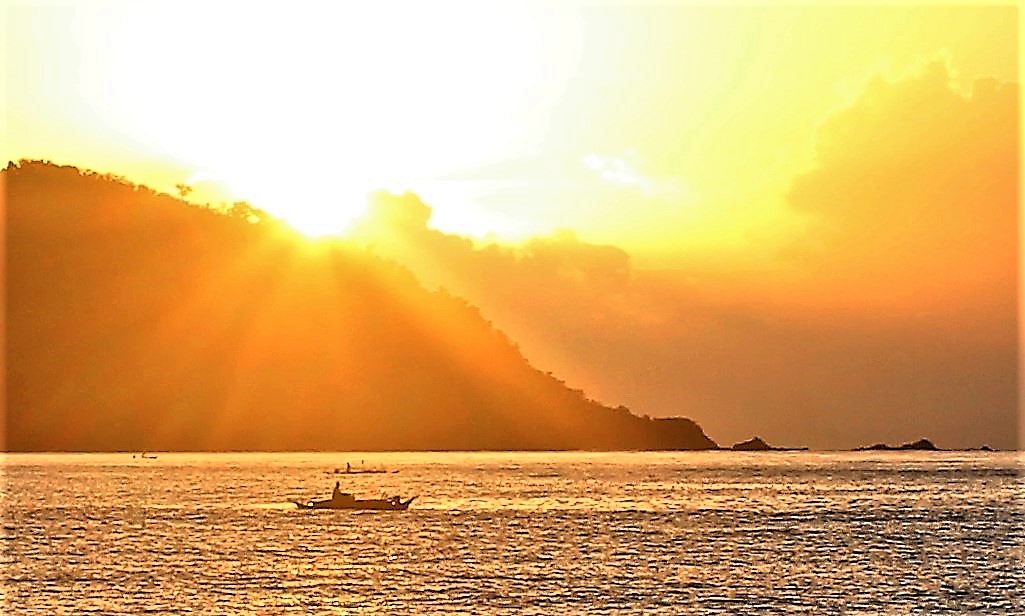
Here is a quick sunset snapshot:


 This photo was taken using the Honor 90 5G, and the quality--at least for me--is quite impressive.


Monday, August 26, 2019

Top 5 interesting things to do in La Mesa Ecopark

A tribute

The La Mesa Ecopark in Fairview, Quezon City is a favorite weekend destination for many people living in the crowded city. It is perhaps one of the last remaining forested areas in Metro Manila and thankfully, it is still free of urban sprawl.

It was not always that way. Many years ago, the was not open to the public. It was only opened in 2004 after a rehabilitation effort was undertaken.

The untimely passing of Ms. Gina Lopez, a known environmental advocate and long-time chairperson of the ABS-CBN Foundation which directly maintains the La Mesa Ecopark, came as a shock to many. Ms. Lopez led the rehabilitation of the La Mesa Ecopark together with a few other stakeholders. Here's hoping that what she started will continue, and that the La Mesa Ecopark remain unspoiled for all of us to enjoy.

I thought of writing this piece as a simple personal tribute to the efforts of Ms. Lopez and  to share some of the things that I have enjoyed doing at the ecopark through the years.

Things to do at the ecopark

Here's my Top 5 list of interesting things to do at the ecopark

1) Go on a picnic. The picnic ground at the La Mesa Ecopark are perfect for both small and large groups. Some of the picnic tables are free to use, while some, such as the large gazebos and events places, can be rented.

2) Enjoy the gardens. There are a lot of flowers, plants, and of course trees in the park. One can visit the gardens near the stairway going up to a view of the La Mesa dam. Most of the time, many flowers are in bloom.

3) Go jogging. From 6 a.m. to 8 a.m., joggers can go to La Mesa Ecopark and pay a minimal fee. The park officially opens at 8 a.m. so this is a perfect window for those who may want to go jogging within the park grounds before the crowd of park visitors come in.

4) Go swimming. The La Mesa Ecopark has two swimming areas which open at 9 a.m. The swimming pools are quite large and well-maintained.

5) Take photos. This is by far my favorite thing to do whenever I am at the La Mesa Ecopark. I usually take a leisurely stroll with my camera and take photos of flowers, insects, the lake, etc. However, if you do plan to do a full-blown photo shoot, you may have to pay a certain fee to use the park.

There, my Top 5 interesting things to do at the La Mesa Ecopark. Do visit the park, it will be worth it.

Monday, July 1, 2019

Throwback: A visit to the Pike Place Market in downtown Seattle

I had the opportunity to travel to Seattle, Washington way back in 2007 while I was working for a daily newspaper in Manila.

I used to write for the paper's technology section and one of the topics I often wrote about was online gaming which was still at its infancy, back then.

Professional online gaming was just starting to become big in the early 2000s, with players from all over the world forming teams that often compete for prize money. The Republic of Korea took the lead in "cybergaming," and the country was the birthplace of the first "World Cyber Games."

And so I was there in Seattle covering the 7th edition of the World Cyber Games to report on Team Philippines. The tournament was quite uneventful, probably because Team Philippines was unable to advance in the latter stages of the games.

However, I did enjoy spending some free time walking in Seattle. The city has a good mix of old and new, with skyscrapers towering over quaint neighborhoods. I had the chance to visit a few "taverns" and coffee shops. I saw a lot of technology companies alongside traditional businesses which showed Seattle's vibrant economy.

In 2007, costs are fairly reasonable and you don’t have to break the bank to have a good time.

Me and a couple of journalists took a stroll in the waterfront, had lunch atop the Space Needle, then headed out to Pike Place Market and watched fishmongers do their thing. The fishmongers put on a show of tossing fish (usually salmon) before wrapping it up with brown paper for the waiting customer. The spectacle usually draws a fairly large crowd.

Here's a fun fact: it is said that the fish throwing was actually a prank on an employee which eventually turned into a beloved tradition. Customers loved the "act" so much that they actually visit Pike Place Market just to see the fish-throwing.

Sunday, June 30, 2019

Reasons why people go into freelancing

There was a time when you had to take an official leave from work to be able to travel and relax. With the emergence of the mobile worker and opportunities for freelancing arrangements, it has now become possible to travel and still do some work.

There are many pros and cons when it comes to freelancing. On one hand, you have control of the work hours that you want to render or be selective of the projects you have to take. On the other hand however, freelancing does not guarantee a steady income and does not provide other benefits that a full-time employment may bring.

In my case, I like freelance writing and here are my reasons:

I like to work at home and spend more time with family
A no-brainer. I like to work at home and spend more time with family which is good if you’re a dad to three almost grown-up kids.

I do not like to commute
I don’t like traffic, which unfortunately, is a daily challenge if you live and work in the city. Commuting can be very draining and can zap that creativity even before you set foot in the office.

I don’t like a 9 to 5 routine
I have nothing against people with regular jobs. For many years, I once had a few 9-to-5 jobs too, but nothing beats managing my own time and working at my own pace.

I like to travel
A few months ago, I had blast writing about “travel,” while I was actually on a road trip with family.


I work best when I’m alone
Freelancer writers are often thought of as these nerds curled up in a tiny corner typing away. This is not untrue, and some (including myself), are often very productive while working alone while in their jammies.

I don’t like do the same thing over and over again
As a freelance writer, I sometimes don’t necessarily like what I write. However, I can always anticipate that the next writing gig will be something new.

I like to juggle different projects
The magic phrase for freelancers is “time management.” I like to believe I have it figured out and thus, juggling a few gigs here and there becomes an enjoyable experience.

I like to challenge myself
Freelance writing challenges me to go out of my comfort zone. As a freelance writer, I am compelled to write about things that I have zero knowledge on. I once wrote a product review of a conveyor belt and it took me three cups of coffee before I came up with a fairly decent copy.

So there. My Top 20 reasons why I became a freelance writer. What are yours?

Tuesday, June 11, 2019

How to have a great time in Baguio's Burnham Park

Visiting Burnham Park

Burnham Park is perhaps the most iconic of all tourist destinations in Baguio City. Rich in history, the park is always part of one's itinerary when visiting the "City of Pines"

A short visit

So we went to Baguio City for a short, one-day vacation and our choice of accommodations was a nice traveler's hotel near Burnham Park. The good thing about the hotel is that it is not too pricey, and is very near 24-hour convenience stores, restaurants, and bars.

Also, it was a stone's throw away from Burnham Park, which was a good thing. We were only staying for a day and a night and it won't be practical if we spend the whole day going to the usual tourist spots.

Things to do in Burnham Park

Stroll.The morning after, we went for a short stroll. The stroll in itself is worthwhile activity. It was quite early, around 6am, but there was a sizable crowd of park visitors including joggers, vendors, etc. milling around Burnham Park.

Jog or walk. We saw a lot of joggers around the park, mostly belonging to the younger set. There was also quite a crowd of people simply walking and enjoying the chilly morning breeze.

Do "Zumba." There were several groups doing "Zumba," which continues to gain popularity as a fun way to exercise. Good thing that Burnham Park has enough space for these groups. Each group has its own beat box and instructor. I did a quick count and saw at least five large groups of Zumba enthusiasts dancing to 80s music beats.

Rent a bike. There were bikers on rented bikes, both grownups and children, zooming in and out around Burnham Park.

Rent a boat. At around 6:30am, operators of boats for rent on Burnham Lake were not yet open, but there was already a crowd of families and groups queuing to rent boats. Burnham Lake is another icon in Baguio City.

Taking photos

The first thing I did was take my camera and take photos of the sunflowers and the garden surrounding Burnham Park. This was a notable experience, as it was my first time to capture honeybees, darting in and around large flowers.

Overall, it was a very good trip. This goes to show that if you're on a tight schedule, one very good option is to just go to Burnham Park and enjoy what the park has to offer.  

Wednesday, May 15, 2019

This summer, travel to Bolinao and catch a picturesque sunset in Patar beach

A summer destination

Patar beach in Bolinao, Pangasinan is a popular destination for beachgoers especially during summer. Patar beach is actually in Brgy. Patar, which is just one of several baranggays near a coastal area in Bolinao.

How to get to Patar beach

Bolinao is about a 6-hour drive from Manila. You can take the NLEX-SCTEX-TPLEX network and exit to Urdaneta, Pangasinan. From there, it is a matter of looking at Google Maps or using Waze to find your way to Bolinao.

We recently went on a road trip to Patar for a much-needed break. We did not take the Manila to Bolinao route, but instead went to Sta. Rosa, Nueva Ecija first before going to Bolinao.

The best route going to Bolinao from Sta. Rosa, Nueva Ecija will take you to a network of roads traversing several towns in Tarlac province, including Tarlac City, Camiling, Gerona and San Clemente, before arriving at Mangatarem, the first town in Pangasinan that you will see.

The trip was about 5 hours. It was a smooth ride all the way because the roads from Tarlac to Pangasinan are all very well maintained. 

Patar beach accommodations

Visitors will notice that there are now numerous inns and small hotels lining up the beachfront or near the beach. This is good, because travelers now have more choices to suit their budgets when it comes to accommodations.

The summer season brings in a lot of visitors to Patar, and as expected, there was quite a crowd when we got there. Fortunately, we already booked our accommodations prior to arriving. The rooms we got were just a few meters away from the beach. 

You will have a lot of choices when it comes to accommodations. If budget is not a concern, it would be better if you stay in a pricier place, say a hotel or an inn with its own compound and access to the beach.

For the budget conscious, there are many rooms for rent near the beach. The only downside is that some rooms are all clustered or concentrated in one area. If you do not mind hearing beachgoers belt some songs in a nearby karaoke machine, then you'll be okay.


Our rooms

The rooms we got were decent, although for the price, one might expect to get a bit more. However, the complimentary nipa hut shed we used to grill our food and eat our lunch in was a nice touch. 

A picturesque sunset

The most interesting part of the trip for me was watching a picturesque sunset at Patar beach with family and friends. The sunset was made even more picturesque by a sandbar on the southern end of Patar which rises when the tide is low. The orange glow of the setting sun and the silhouette of beachgoers walking along the sandbar makes for a great sunset photo.

Monday, May 13, 2019

An amazing way to spend Holy Week in Vigan

Holy Week

Holy Week is an anticipated holiday in the Philippines, a mostly Catholic country. The holidays usually start on Holy Thursday and Good Friday, and end on Easter Sunday.

For most Filipinos, the long holidays is a chance to travel and go on vacation. For devout Catholics, Holy Thursday and Good Friday are often spent visiting churches or praying and contemplating in silence. The revelry usually starts on Black Saturday and Easter Sunday, where most go to the beach and celebrate.

Going to Vigan

For our family, Vigan, Ilocos Sur, was the destination of choice. Coming from Sta. Rosa, Nueva Ecija, we took the SCTEX-TPLEX loop, which was still the fastest way to traverse the provinces of Pangasinan and La Union.

By car, the route is pretty direct. Traverse the Sta-Rosa-Tarlac Road until you reach the TPLEX-Tarlac Exit, which will be on your left. Traverse TPLEX and exit at Pozzorubio in Pangasinan. From there, follow the road to La Union province, until you reach Vigan in Ilocos Sur.

Traffic

However, our decision to leave on a Holy Thursday was a big mistake, with the usual 7-hour travel time stretching all the way to 12 hours because of traffic. The sheer number of motorists all going up north made bottlenecks of the many towns and municipalities along the way. The typical 2-lane roads of these towns were no longer able to support the volume of incoming--and outgoing--traffic. Good thing we already had a place to stay once we arrived in Vigan.

Going to Calle Crisologo

Vigan, too, was pretty crowded. But despite the crowd, we had an amazing time visiting a few interesting places, like the St. Augustine Church in Bantay, and the Bantay Bell Tower. We took the customary walk at Calle Crisologo, and visited St. Paul Cathedral.

One highlight of our visit to Calle Crisologo was witnessing the "Semana Santa" parade of numerous religious images depicting the suffering and resurrection of Jesus Christ.

Despite our little misadventure on the road, visiting Vigan was an enjoyable, as far as spending time with loved ones is concerned.

Tuesday, February 26, 2019

Taking macro photos in a garden in Sta. Rosa, Nueva Ecija

My parents live in Sta. Rosa, Nueva Ecija, in a quaint bungalow surrounded by rice paddy fields.

To reach the house, one needs to take a 2-kilometer dirt road. The house is also 
about 7 kilometers away from the town center and it is understandable that some may consider it "remote."

I love going home to Sta. Rosa not just to spend time with my parents but also to take pictures, particularly macro (or close up) photos using an entry level camera and a few extension tubes.

One of my favorite spots to take macro photos is at a nearby garden where Mama Evie's orchids and other flowering plants are found.


Macro photography is not easy. It is not the lack of subjects, but more the challenge of controlling my shaky hands. I learned the hard way that in macro photography, the smallest of movements can distort and reduce the sharpness of the photos.

So far, this method of photography has been the most rewarding for me. With my modest gear, I had to crouch, sneak up and concentrate a lot to focus on the subject or subjects. 

The crouching is particularly uncomfortable and not good for the knees, but the satisfaction comes after I am able to take a photo that I like after trying to get it several times. 

Monday, February 18, 2019

Into photography

Photography as a hobby

I recently took up photography as a hobby. I bought an entry level camera, a Canon 1300D, and also completed a short online course on photography.

I am not into reviewing camera gear, but so far, I find the Canon 1300D a great choice for beginners like me. My modest gear includes the entry level camera, a kit lens, a 50mm prime lens, some extension tubes, and a 18-200mm zoom lens.

My photos

For my photos, I also started another blog (more of a portfolio type of a website called "The Lighter Side Photography Blog"). Aside from storing my photos, I also write about my experiences as an amateur photographer. It is a modest blog site that I intend to share with family and friends.

I am envisioning this travel blog and the photography website as avenues whenever I need to be creative, and "being creative" for me is being able to generate my own content by uploading my photos and doing some writing.


Macrophotography

My first photographs are mostly nature-related, such as insects and water droplets. To be honest, I find macrophotography to be very fulfilling and the variety of subjects that I can focus on is amazingly vast. 

But aside from macrophotography, I do intend to post more travel photos in the future and perhaps go into portraiture or landscape photography. But for now, macrophotography satisfies my cravings whenever I need to relax and take a break from work. 

As a beginner, the Canon 1300D is proving to be very useful for me. I do plan to upgrade my gear but that can wait.


Here are some photos.


Tuesday, February 12, 2019

Reviving my travel diary

Reviving my blog

It is difficult to revive a blog after so many years of not updating it.

At first, I wanted this to be a simple journal and a way for me to write about places I have been to. The goal  back then was to have an avenue to write and gather my thoughts.

I started this blog during the time that I was leaving the Philippines to work and live abroad way back in 2009. I thought back then that writing was also a way to fend off boredom, and to make it easier for me to transition as an overseas worker.

Diary of a journalist

Also, a majority of what I wrote here came from my travels as a journalist. I never fancy myself as a travel writer and most of the previous posts were written from my perspective as a journalist.

A lot has changed since then. I am now based in Manila, and will probably won't go out of the country again to work. I still write (and edit) for a living, and from time to time, I still pitch news stories as a contributor. The bulk of my time is spent as a freelance worker, juggling a few writing and editing jobs.

A continuing journey

I guess the reason I want to revive this blog is to continue writing about my travels (and everything in between) beyond the perspective of a journalist. The dynamics have changed through the years. I now have three (almost) grown up children with my wife of 20-plus years.

I am fortunate that most of the travelling I have been doing now is with the family and close friends. I no longer see myself travelling alone or leaving the country to work abroad anytime soon.

Thursday, January 10, 2013

How to enjoy riding a mountain bike for the first time

Riding for the first time

I think there are no hard and fast rules on how to enjoy riding the mountain bike as a first-timer, but for me, my very first mountain bike ride was enjoyable because I was with a group of close family and friends.

The experience was more than just a bike ride: it became a bonding moment.

Benefits of riding a mountain bike

There are some who might consider that it is a tad late for someone in his 40s to take mountain biking. Aside from being a very physically taxing activity, mountain biking also poses danger to riders from spill overs, getting blind-sided, or tumbling over.

For me, however, the benefits definitely outweigh the risks. Riding the mountain bike is great for cardio and for you legs. It is also a great overall workout for your whole body because biking is more than just pedaling like crazy.

How to enjoy the ride

So here's my own take on how to enjoy the ride based on my experience.

There I was one fine day in October joining a few friends and cousins on my very first mountain bike ride. I was on a borrowed bike and adjustments had to be made. I made sure I had a helmet, comfortable clothes, a water bottle full of water, and of course my sunglasses to protect my eyes.


The mountain bike course


We set our course in a nice but still challenging route in my hometown of Sta. Rosa, Nueva Ecija, going to the neighboring town of Palayan City. Our destination will be Tanawan, a nice, uphill spot where locals often go to enjoy a panoramic view of surrounding towns and the lush green carpet of rice fields.

We rolled out in our mountain bikes early and since most of us are newbies, we rode at a leisurely pace. The cool, early morning breeze made for a very relaxing ride as we passed by quaint houses, farms, orchards, and endless rice fields spanning through the horizon.

We passed by the military reserve of Fort Magsaysay and marveled at surrounding hills and valleys. The roads are almost empty save for the occasional vehicle or tricycle. Good thing we rode off early.

As a first-timer, I enjoyed the ride immensely, and often, I find myself lagging behind the group because I was really taking my time to enjoy the sights and sounds.

The ride was enjoyable that I almost did not notice that we have already logged in a significant number of kilometers (for newbies) and that we are almost at our destination.

Pit stop

We had our first pit stop at a nice sari-sari store by the road. We stayed longer than we should have because my uncle knows the owner of the store and the customary "kumustahan" had to be made between friends. We parked our mountain bikes near the store.


After a few minutes, we set off again to our next stop.

Tanawan in Palayan City

Although we we’re not able to ride the last kilometer or two going to Tanawan (the road was just too steep for us), it was a very satisfying ride that is worth repeating.

We stayed for almost an hour taking pictures, eating our snacks and just enjoying the view at Tanawan while our bikes are “parked” near a nipa hut atop a gently sloping cliff.

Ride back

The ride back was even faster, because there were downhills that allowed us to go a bit faster. The end of the day was indeed satisfying and all of us were looking forward to another ride.

Thursday, September 20, 2012

4 interesting things to do when travelling to Dagupan City in Pangasinan

A highly urbanized city

Dagupan City in the province of Pangasinan is a highly-urbanized metropolis that will always be part of a traveler’s itinerary whenever one needs to explore Northern Luzon.

What is good about Dagupan City is its proximity to other places in the province of Pangasinan, including Lingayen Gulf. This means one can enjoy all the luxuries of city living while still being close to the sea.

Getting to Dagupan

I used to work for a content production outfit, and as part of our coverage of interesting places up north, we took a roadtrip to Dagupan in early September. Our rented van took the NLEX-SCTEX network, and coming from Quezon City, the trip took about 4 hours or so. 

'To do' list

Here are  a few interesting things you can do in Dagupan City.


1.) Time your visit during the "Bangus Festival." We timed our trip to Dagupan to visit the "Bangus Festival," a fairly new but very popular festival drawing huge crowds. The festivities center around the bangus or milkfish, perhaps the most popular export that Pangasinan is known for. 
The street parties were noteworthy and witnessing the longest grill in the world and partaking of fresh grilled oysters from generous locals was quite an experience.

2.) Hire a boat and cruise Pantal River. Our next stop took us to Pantal River where we hired a few motorized bancas to cruise on the river. It was an interesting experience, as we sailed past communities living on the shore. It was also noteworthy that the river remains clean, despite the number of houses in communities along the river banks.

3.)  Buy some seafood at the Magsaysay Fish Market. If you want to take home some of the famous Bonuan bangus and other seafood, don't forget to drop by the Magsaysay Fish Market. We brought with us our own medium-sized coolers to store those seafood that we took back home.

4.) Eat at Silverio's Seafood Restaurant. They say you can't go wrong if you follow a local's recommendations when it comes to dining. And that's exactly what we did. We went out for lunch at the famed Silverio's Seafood Restaurant and loaded up on seafood, particularly the different dishes featuring 
bangus belly.

A nice stopover

For the jaded traveler, Dagupan City may no longer be that appealing and that there are more exotic places in Pangasinan that are worth the trip. However, Dagupan City continues to be a nice stopover for those trekking up north.

Wednesday, September 5, 2012

A journey to Caramoan

We prepped up the 7-seater vehicle, packed our gears, and drove off one early morning. We have a long drive ahead of us, going south. Far south.

It was almost dusk when we arrive to the first leg of the trip. We had dinner in Naga City, then re-traced our tracks to Ragay in Camarines Norte.

We still have a long way to in this journey to Bicolandia and our ultimate destination will be Caramoan.

Caramoan is a small coastal town surrounded by numerous small islands. The town can be reached via ferry. The islands have become very popular because of the reality show “Survivor.” During our trip, there were no less than four “Survivor” editions being shot or have been completed in the isolated islands surrounding Caramoan.

The interesting part of our journey is that we almost did not make it to Caramoan. The ominous looking grey clouds as we drove along the length of Camarines Sur going to the port were not a good sign. And true enough, a storm raged on preventing ferry boats to set sail and go to Caramoan.

And there we were, stuck in a modest hotel hoping and waiting to the clouds to clear up. It was a good two days of waiting before we finally saw the sun peek out of the clouds.

Leaving our vehicle in the port, we rushed to the ferry boat station eager and excited. After an uneventful 2-hour boat ride, we sat foot for the first time in Caramoan town. After securing our accommodations for the night and getting in touch with our local contact, we hurriedly went to this small dock where a moored “bangka” is waiting to take us to the many islands surrounding the town.

It was nice seeing a cluster of mangroves with many sea birds perched among the branches. It was nice seeing emerald waters reflect sunlight. It was wonderful seeing an unspoiled cove, with crystal clear water, and jumping in the water from a seemingly out of place 10-foot boulder gutting out of the beach. It was nice walking barefoot in white sand that is comparable to the world-famous white sand of Boracay.

In essence, it was nice getting away from it all. We were in paradise.

Monday, June 11, 2012

A trip to see the Pahiyas Festival in Lucban, Quezon

The annual Pahiyas Festival is perhaps one of the most popular feasts in Lucban, Quezon.

At first glance, the Pahiyas Festival may seem like your ordinary fiesta, but the celebration is truly replete of tradition that the people of Quezon are mighty proud of.

From the “kiping,” to the parade, to the “agawan,” the Pahiyas Festival is a tradition so deeply ingrained to Quezon town folks that it has lasted the test of time.

The harvest festival held every May, only becomes more colorful and more festive year after year.

We went to Pahiyas Festival aboard one day, and although our rented van was a bit cramped, the 4-hour trip to Lucban was worth it

It is not often that one can go to an age-old celebration that attracts a wide variety of visitors from foreign and local tourists to locals living in nearby towns.

It seems the Pahiyas Festival is reflective of that long gone era of community bonding and unity in commemorating the town patron saint.

Streets are often closed for the P that the

It is reflective of what a true Filipino tradition embodies which has become rare in this day and age. I would not mind getting back to Lucban and seeing the Pahiyas again.

Friday, March 16, 2012

Papa's dogs: Scotty and Blacky

Scotty and Blacky

Scotty and Blacky are probably two of the nicest dogs you’ll ever see. The two dogs are our resident ‘guard dogs’ in a modest ‘farm’ in Sta. Rosa, Nueva Ecija where my parents now spend most of their time.

Scotty and Blacky are very much part of the family. Their master is my dad. Scotty is massive next to Blacky, probably because Scotty is part Labrador and part Retriever. Blacky on the other hand, is half Labrador and half Pinoy dog (read: askal).

Old and young

Blacky is now 6 years old, pretty old for a dog, while Scotty is a springy 9 month old puppy. At first, Blacky wasn’t too thrilled to find a dark brown dog being introduced in the farm. Blacky even tried-and succeeded—in physically imposing his natural instinct to let the other dog know that Blacky is the alpha male in the farm.

After a few weeks however, and with Scotty’s willingness to ‘bow’ to Blacky, the two dogs now happily share the guarding chores in the farm, although the two dogs rarely do ‘guarding’ because of their friendly disposition.

However, the sheer size of Scotty, and the respectable growl of Blacky seem to serve the purpose of intimidating neighbors and strangers passing by the gate of the farm.

Leader of the pack

My dad would often go out on walks every morning, and on his side are two loyal, albeit hyper-active dogs. Dad would often lead his ‘pack’ outside the farm and into a dirt road. The road is unpaved and is surrounded by rice fields and a small river.

My dad and his ‘pack’ would often go out on walks very early while the morning dew still glisten from the rays of a rising sun.

Before breakfast, the pack would be back in the farm.

The farm in Sta. Rosa

Our modest 600-square-meter farm is in Sta. Rosa, Nueva Ecija, a good 2 hours and 30 minutes away from Manila. This is where we go on vacation especially during summer and whenever we need a temporary respite from work.

During the start of the summer, the branches of the mango trees will be heavy with fruits although it will take a few more weeks before we can enjoy the sweet fruits. The guava trees will be full of guava fruits, and the macopa will be decorated with small, pink and dark red fruits. These are just a few of the fruit trees at the farm.

Scotty and Blacky, as well as chickens and ducks, would often rest under the shade of these fruits trees.

My parents and I would often sit on a long wooden stool under one of the mango trees and enjoy a cup of hot coffee while letting time pass by slowly.

Perhaps the humble farm serves the same purpose for me. Whenever I need to take a short rest from work and avoid the stress of living in a fast-paced city, the farm will always be there.

Monday, February 6, 2012

Surfing in San Juan, La Union

It may not be as high-profile as Siargao, but San Juan in Urbiztondo, La Union is steadily becoming a surfer's paradise.

The rates are pretty reasonable and the surfing instructors are very friendly. The waves are about 4- to 5-foot high and the swells are relatively mild.

Funny though is that I was not even able to surf the San Juan surf.

It was a family trip, and the very first time that I'll be introducing my then 14-year-old son to surfing. The plan was for me to encourage him to try something new, beyond video games and basketball.

I was beside him while the surfing instructor gave him the basics. And yes, being a doting dad, I was pretty nervous. Can he handle the waves? Can he stay upright and not crash? Will he enjoy the experience?

After a few minutes, my son was ready to go. I saw excitement in the eyes of my boy as he started making his way to beach, with the surfing instructor tagging along. His deceptively reed-thin frame look even more frail as he wore the rash guard, a kind of surfer's garment meant to protect his torso from the surfboard.

I always knew my son was athletic, despite his seemingly frail frame. But seeing him go and ride the wave--at his very first try--made his dad proud.

The hour whizzed by and before I knew it, the surfing was over. But for my son, it was just the beginning.

Monday, October 24, 2011

Tranquility at Tanawan in Sta. Rosa

About thirty minutes away from the town proper of Sta. Rosa, Nueva Ecija is Tanawan, a favorite destination of locals and visitors.

"Tanawan" may mean "viewing area" and the place is rightfully named because it offers visitors a panoramic view of the rolling hills and carpets of green surroundings. it also gives you a unique view of some parts of Cabanatuan City.

Before reaching Tanawan, you will pass through the main entrance of the nearby Fort Magsaysay military camp, itself a worthy destination especially if you are riding a bike or jogging.

Tanawan is also part of Palayan City, which is the capital of Nueva Ecija.

Getting to Tanawan is an adventure in itself. There are no public transports and most locals go there on a motorbike and in groups. The long, winding, and hilly roads give visitors a glimpse of the life of people living in the many communities that you will pass by before reaching Tanawan.

The roads are paved and relatively new. Passing through, one can see numerous orchards, green rice fields, massive trees with equally massive canopies, farms, and quaint houses. You will also pass by a military reserve, which can give you a feeling of security, considering that Tanawan is still fairly remote.

A short, steep zigzag road (about 2 kilometers long) will finally take you up to Tanawan.

Reaching Tanawan, there are a few carinderias that can offer anything from food to beer. For a modest rent, you can use the nipa huts scattered around in which to enjoy your cold drinks or your food.

Once you're settled in the nipa hut, you can enjoy the view and the cool breeze. From afar, the horizon looks untouched, dotted only by a few small houses. Tanawan is mostly tranquil and the silence is often disturbed only by the occasional motorbike revving up to a hilly climb up the road.

Here's a quick guide to get to Tanawan:

1.) From Sta. Rosa town proper, simply follow the Sta. Rosa-Fort Magsaysay Road.

2.) From Maharlika Highway, turn left (if you're coming from the north) or turn right if you are coming from Manila or Bulacan.

3.) Coming from the neighboring town of Zaragosa, Nueva Ecija simply go straight ahead after passing by the Sta. Rosa Bridge and Sta. Rosa public market.

Tuesday, July 26, 2011

My Saudi sojourn (Part 3)

They say the last few months will be the hardest, when you’re about to end your stay in a foreign land and go back home. Overall, my stay in Saudi Arabia was uneventful. Sure, I’ve been to a number of interesting places, met a few interesting people, gained some friends, and immersed in a foreign culture.

I really felt I belonged to this close circle of friends I learned to trust. In return, I have been a loyal and helping friend to them. In the grand scheme of things, it is my hope that I will remembered as a good friend to those I’ll be leaving behind.

A few weeks before I decided to approach the office manager to give my resignation letter, I harbored mixed feelings. I am happy to be just a few weeks away from going back home to family and friends. At the same time, I felt a bit nostalgic knowing that many Filipinos in Saudi Arabia do not have the luxury of making decisions or choices given me. Many Filipinos do not have the luxury of choosing jobs, and many still are literally stuck in a foreign country to toil until better days come for them. And many of these Filipinos are my friends.

The economics are really simple. A Filipino worker is better off working in a foreign land where there are many job choices, if one is not too picky. And this does not apply only to Filipinos with menial jobs. Professionals in Saudi Arabia will have a difficult time leaving their jobs, knowing fully-well that high-paying jobs are too few in their homeland.

Some even had to bring their families to Saudi Arabia, resigned to the fact that they will be staying there for a really long time. As for me, I guess I am fortunate to have friends and colleagues who are eager to work with me again. I do not call it luck, but rather choice. I chose to work back in my home country knowing that I will be leaving behind a lucrative job.

The night I was about to leave, I bid a happy, but sad, goodbye to my friends. It will be an image that I will remember for the rest of my life. There they were, waving, some shaking my hand, some heckling, some laughing, as I boarded the company car to take me to the airport.

After a few more hours of anxiety, I boarded the plane to take me back to Manila. Unlike the first time, the hours whizzed past and before I know it, the plane was touching down. I was back in the Philippines, back home, at last.

Friday, July 1, 2011

The Dupinga River

Dupinga River is located in Gabaldon, one of the more remote towns in the vast province of Nueva Ecija.

According to accounts, the river was merely a source of water from the scattered communities around Gabaldon. Traditionally, locals, most often penitents during Holy Week troop to the river after traversing the numerous churches and chapels along the way.


But the river, with its clear and clean water, begun attracting a slew of visitors.
Soon after, locals eventually erected a few nipa huts and started renting them out to visitors. A sari-sari store followed, a
nd more nipa huts eventually mushroomed around the edges of the river.
Today, Dupinga River is a favored location of picnic goers, mostly out-of-town visitors.

For a modest fee, one can rent a hut near the edge of the river and take a dip in the cold water.

The river is still one of the best kept secrets of Gabaldon town. Seeing its rugged beauty, one can’t help but wish that it remains a secret.

Wednesday, May 25, 2011

My Saudi Arabia sojourn (Part II)

It was the onset of the summer season of 2009 when I got to Saudi Arabia to work for a year. I immediately felt the suffocating heat whenever I went outdoors.

Thankfully, I did most of my work from my computer in a moderately large office cubicle I share with a few other Filipinos. The first few weeks allowed me to adjust to the working conditions and office culture.

The company employs many Filipinos, as well as Saudi Arabs, Palestines, a Venezuelan, a Nigerian, and quite a number of Indians, Bangladeshi, and Pakistani, among others.
To my relief, the company is a bit lax when it comes to office formalities. There is no bundy clock, but office workers do follow a more or less 7am to 5pm schedule. Employees, especially when not busy on a project, are free to mill around.

I soon found out that the “work cycle” involves a lot of free time, but when work does come in, everyone would be busy. It is also good to note that the company is output oriented.

I am not good at ranting about work, but I found it fascinating how some office employees, particularly those in the lower rung, tend to emphasize their perceived importance in the company, which I think is only natural.

The weekend starts on a Wednesday, when work is only half-day, until Thursday and Friday where there is no work at all. Interestingly, the work week starts on a Saturday.

Most foreign workers have to make this adjustment because as a Muslim country, Saudi Arabia observes Thursday and Friday as its rest days.

My work week was mostly uneventful, and for a good half of 2009, my routine is mostly ordinary and regular.